The short answer
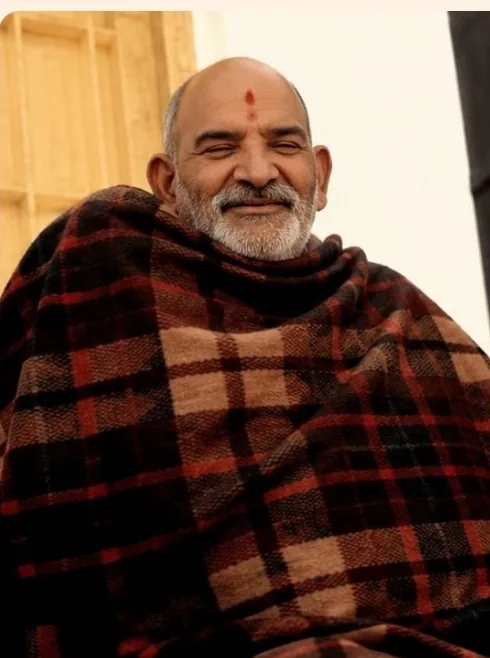
"Maharaj" is a respectful way of addressing a saint or teacher, and the "-ji" adds affection. Devotees of Neem Karoli Baba simply say Maharaj-ji, or sometimes Babaji, the way one speaks to someone one loves and reveres. It is how the people who sat with him remembered him, and it is the name the film Hanuman Ansh uses for him.
A saint with many names
He did not keep one name. Devotee accounts record a different name at nearly every stage of his life:
- Baba Lakshman Das: the name he took after leaving home to wander as a sadhu.
- Tallaiya Baba: a name from his years of austerities at Bavania in Gujarat, according to the devotee site maharajji.love.
- Handi Wale Baba and Tikonia Wale Baba: names recorded from his wandering years, listed on Wikipedia.
- Neeb Karori Baba: what villagers called him while he stayed in the village of Neeb Karori in the 1930s.
Town after town gave him a different name, and in the end the one that stayed was the one people said with love: Maharaj-ji.
Neeb Karori or Neem Karoli?
The name Neem Karoli Baba comes from the village of Neeb Karori. Over the decades the spelling drifted to "Neem Karoli", which many people take to mean the neem tree. According to the devotee site above, the original name was Neeb Karori, and a native of the village confirmed that both spellings were used there. The same source reads "Neeb Karori" as roughly "a strong foundation", though that is a devotee's interpretation rather than a settled etymology.
The Hanuman connection
Above every other devotion, he loved Hanuman. He founded the ashram at Kainchi Dham in the Kumaon hills in 1964, with a Hanuman temple at its centre, and Wikipedia records that more than a hundred temples were built in his name. Kainchi Dham still draws thousands of seekers every year, and its annual fair is held on 15 June. He left his body in Vrindavan on 11 September 1973. The title of the film, Hanuman Ansh, means "a portion of Hanuman", and reflects how devotees connect him with Hanuman.
What he taught
He wrote almost nothing and gave no long sermons. His teaching is remembered in a single line: love everyone, feed everyone, serve everyone, remember God. People who sat with him rarely remembered his words. They remembered how they felt: lighter, seen, and quietly changed.
Why this matters for the film
Producer Anupriya Nagar says she did not choose to make this film. In her words on The Film page: "I did not choose this story. It chose me." She describes the work as something that began with devotion rather than ambition: "Making Hanuman Ansh has never felt like building a film. From the very start it felt like a calling from Baba." Before the team began, they completed forty-three days of the Hanuman Chalisa.
Press coverage of the film and of its connection to him includes ANI on director Vishal Chaturvedi explaining the story, DNA India on the saint and the film and Aaj Tak on Anupriya Nagar’s visit to Kainchi Dham. The full list is on the media page.
Names and dates come from devotee accounts and Wikipedia and differ slightly between sources; where they disagree, this page avoids stating a single version. Sources: maharajji.love, "What About Maharajji's Names?" and Wikipedia, "Neem Karoli Baba".
Frequently asked questions
Who is Maharaj-ji?
Maharaj-ji is the name devotees most often use for Neem Karoli Baba, the Hanuman-devotee saint who founded the ashram at Kainchi Dham in 1964 and died in Vrindavan on 11 September 1973.
Why is he called Neem Karoli Baba?
The name comes from Neeb Karori, a village where he stayed in the 1930s. Over time the spelling drifted from Neeb Karori to Neem Karoli.
What other names did he have?
Accounts record Baba Lakshman Das, Tallaiya Baba, Handi Wale Baba and Tikonia Wale Baba, as well as Babaji and Maharaj-ji.
What does Hanuman Ansh have to do with him?
Hanuman Ansh (2026) is a Hindi film inspired by his life. 'Ansh' means a portion or part, and the title reflects how devotees connect him with Hanuman.